Animal Health Certificate Guide for UK Pet Travel
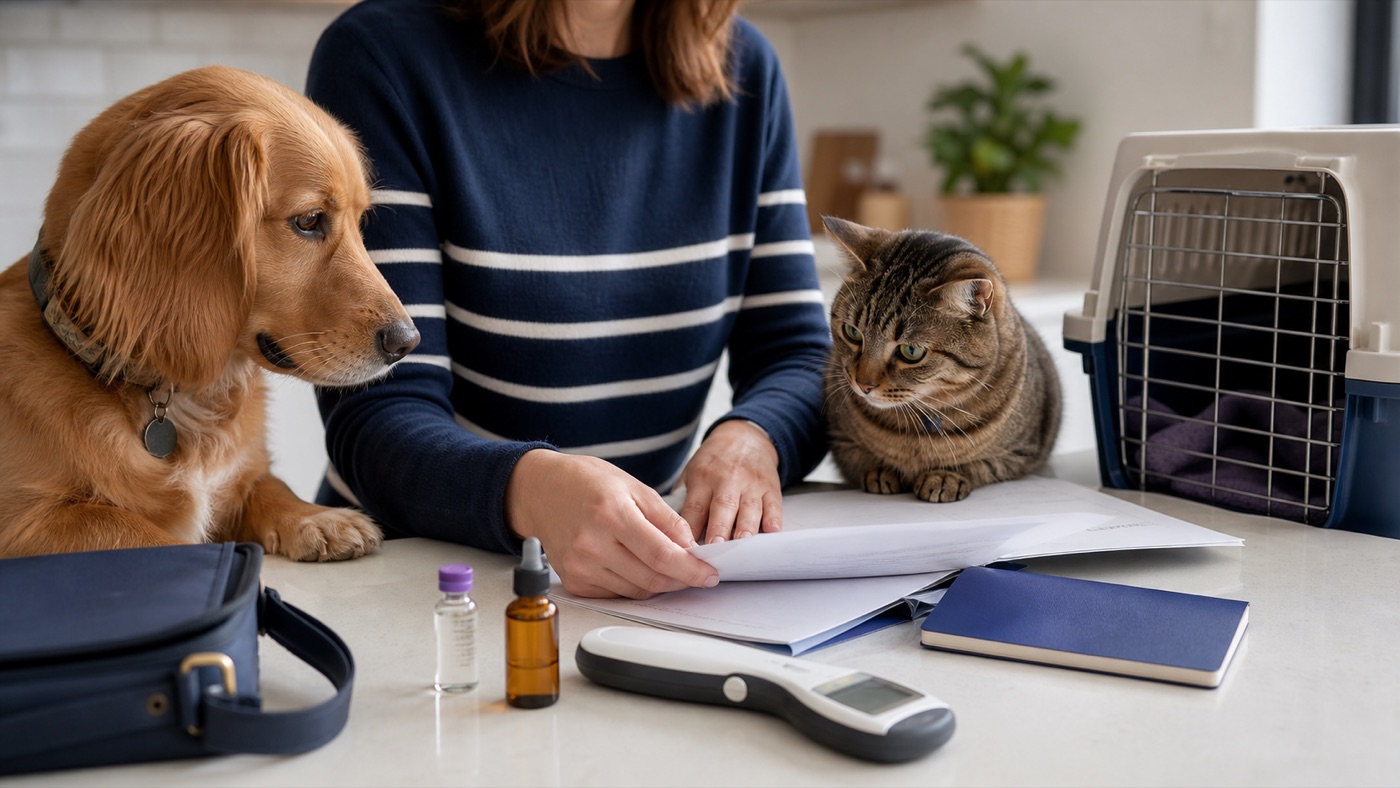
A practical, GOV.UK-sourced guide to animal health certificates for UK dogs, cats and ferrets travelling to the EU after Brexit.
An animal health certificate, often called an AHC, is the document most pet owners in Great Britain need when taking a dog, cat or ferret to an EU country. Since Brexit, a Great Britain-issued pet passport is no longer valid for travel from Great Britain to the EU.
GOV.UK says pet owners travelling to an EU country must make sure their pet is microchipped, vaccinated against rabies and has the correct travel document. For most journeys from England, Scotland or Wales to the EU, that document is an animal health certificate.
This guide is general information only. Always check GOV.UK and your vet before booking travel.
The paperwork can still catch people out. One Animal Health Certificate can cover up to 5 pets, but you still need the timing, microchip details, rabies records and return rules right before you travel.
What an animal health certificate does
An AHC confirms that your pet meets the EU pet travel requirements at the time of travel. It records key details such as your pet’s microchip number, rabies vaccination history, owner information and the destination country.
The certificate must be signed by an Official Veterinarian, often shortened to OV. Your regular vet can issue one if they are authorised as an OV. If they are not, ask the practice to point you to a vet who can help.
How many pets can go on one AHC?
GOV.UK says you can add up to 5 pets to one animal health certificate. That means two pets travelling together, such as one dog and one cat, do not automatically need separate certificates.
Each pet still needs to meet the travel rules, including microchipping and rabies vaccination requirements. The number of appointments depends on the vet practice and your pets’ records, not a blanket rule that every animal must have its own certificate.
When to get an AHC
GOV.UK guidance says an AHC is valid for entry into the EU for 10 days from the date it is issued. That 10-day period is the entry window, not the whole life of the certificate.
After you enter the EU, the same AHC can be used for onward travel within the EU for up to 6 months and for re-entry to Great Britain for up to 6 months, provided the relevant conditions are still met.
That timing means you should book the appointment close enough to departure for the certificate to stay valid, but not so late that a paperwork problem leaves no time to correct it.
Dogs returning to Great Britain usually also need a separately timed treatment. Read our guide to the 24-to-120-hour tapeworm-treatment window when planning the return journey.
What to bring to the vet
Take proof of your pet’s microchipping date and vaccination history. The microchip must have been implanted before the rabies vaccination that is being relied on for travel.
If your pet’s rabies vaccination is a primary vaccination, you normally need to wait at least 21 full days before travel. Your vet can confirm whether a booster is still valid or whether the waiting period applies.
How much does an AHC cost?
GOV.UK does not set one fixed price for an animal health certificate. Costs vary by vet practice, location, the number of pets included and whether vaccines or other treatments are needed.
Ask for a written quote before booking. Be cautious with any website that presents a single high estimate as if it applies to every owner.
Do you need a new certificate for every trip?
Yes. GOV.UK states that pets need a new animal health certificate for each trip to an EU country from Great Britain or Northern Ireland.
This is one of the biggest differences from the old UK pet passport system. Frequent travellers should plan for repeated vet appointments and keep their pet’s vaccination records organised.
What if there is a mistake?
Incorrect paperwork can cause delays, extra checks or refusal at the border. It is worth checking names, microchip numbers, vaccine dates and travel dates carefully before you leave the vet.
That does not mean every typo automatically leads to quarantine. The outcome depends on the error, the route, the destination rules and the border or carrier checks involved.
Source
This guide is based on GOV.UK guidance: Taking your pet dog, cat or ferret abroad and Getting an animal health certificate.