Dog Tapeworm Treatment for Returning to Great Britain
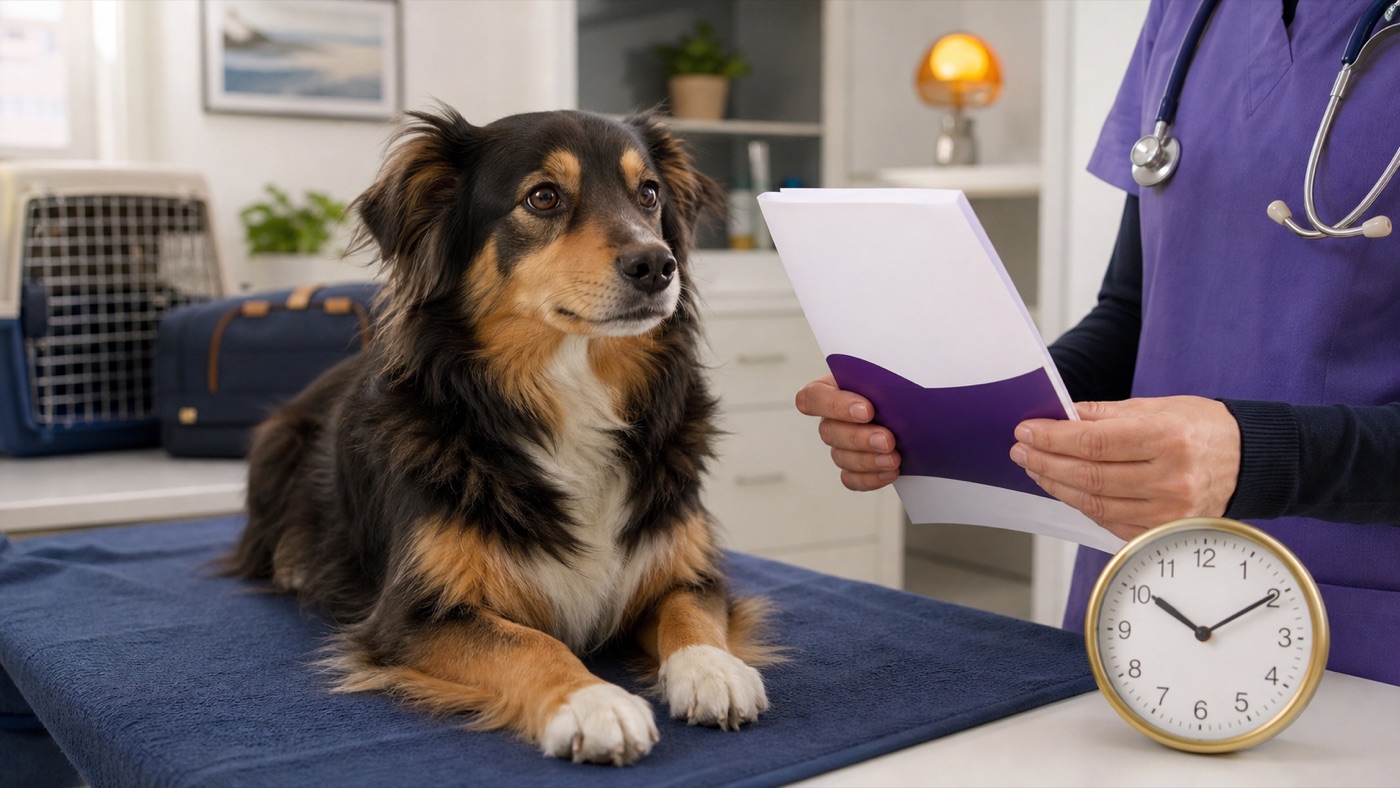
When dogs need tapeworm treatment before entering Great Britain, including the 24-to-120-hour window, exemptions and vet records.
Most dogs returning to Great Britain need a vet-administered tapeworm treatment more than 24 hours and no more than 120 hours before arrival. The timing is counted back from when the dog enters England, Scotland or Wales, not from the ferry departure, flight departure or vet appointment booking time.
There are exemptions for dogs travelling directly from Finland, Ireland, Northern Ireland, Malta or Norway. This guide explains the general rule for pet travel; check your route and the latest official guidance before travelling.
Which dogs need tapeworm treatment?
GOV.UK says a vet must treat your dog for tapeworm each time you bring it to Great Britain unless a direct-travel exemption applies. The vet must also record the treatment in an accepted pet travel document.
The rule applies to dogs entering England, Scotland or Wales. It does not apply to cats or ferrets, and travel into Northern Ireland is covered by separate guidance.
Tapeworm treatment is one part of the return process. Your dog may also need a microchip, rabies vaccination, accepted travel document and an approved travel route. If you are travelling from Great Britain to the EU first, our animal health certificate guide explains the outbound paperwork.
How does the 24-to-120-hour window work?
Treatment must be given:
- no less than 24 hours before your dog enters Great Britain
- no more than 5 days, or 120 hours, before your dog enters Great Britain
Both the date and exact time matter. Plan from your expected arrival time in Great Britain and allow for realistic journey timings.
For example, if a vet gives the treatment at 1pm on Monday, the dog can enter Great Britain after 1pm on Tuesday. The dog must arrive no later than 1pm on Saturday.
This is a general timing example, not personalised veterinary or travel advice. Ask your vet if you are unsure how the window applies to your itinerary.
What treatment and record are required?
GOV.UK says the treatment must be approved for use in the country where it is given. It must contain praziquantel or an equivalent proven effective against the Echinococcus multilocularis tapeworm.
Check that the vet records all of the following in the Echinococcus treatment section of your dog’s pet passport or health certificate:
- The product name and manufacturer.
- The date and time of treatment.
- The vet’s stamp and signature.
Before leaving the appointment, check that the recorded time is clear and that the details are in the correct section. Keep the travel document accessible during the return journey.
Which journeys are exempt?
Your dog does not need this tapeworm treatment when travelling directly to Great Britain from:
- Finland
- Ireland
- Northern Ireland
- Malta
- Norway
The word “directly” matters. If your route passes through or starts in another country, confirm which rules apply rather than assuming the exemption carries across the whole journey.
What if the return journey is delayed?
If a delay means your dog would enter Great Britain more than 120 hours after treatment, GOV.UK says the dog may need another treatment before returning.
Check with your travel company and speak to a vet as soon as the timing problem becomes clear. Do not calculate only from the original departure time: the relevant point is when the dog actually enters Great Britain.
The GOV.UK guidance for bringing a pet to Great Britain also says to check that your route is approved for pet travel. Carrier and route requirements are separate from the veterinary timing rule.
Can treatment be given before a short trip?
Sometimes. If you will return to Great Britain within 5 days, GOV.UK says a vet can give the treatment before you leave.
You must still:
- wait at least 24 hours after treatment before re-entering Great Britain
- re-enter within 120 hours of treatment
If you leave Great Britain and return in less than 24 hours, the treatment must be arranged before departure so the full 24 hours can pass before you come back.
If the trip no longer fits within the timing window, another treatment may be needed abroad. GOV.UK also advises treating the dog again within 28 days after returning to Great Britain.
Is this the same as the destination country’s tapeworm rule?
No. The rule in this guide concerns bringing a dog into Great Britain. Your destination or another country on your route may have different entry requirements.
For example, France is not one of the EU destinations for which GOV.UK lists an outbound tapeworm-treatment requirement, but dogs returning from France usually need treatment before entering Great Britain. Our guide to taking a dog from the UK to France covers both sides of that journey.
Always check the rules for:
- Entering your destination country.
- Any country you travel through.
- Returning to Great Britain.
- Your ferry, train or airline route.
Return journey checklist
Before setting off for Great Britain:
- work out the 24-to-120-hour window from your planned arrival time
- book a vet who can provide and record the correct treatment
- check the product details, date, time, stamp and signature before leaving
- keep the original travel document with you
- confirm your route accepts pet travel
- recheck the timing if your journey changes
For the wider outbound and return paperwork, use the free UK-to-Europe pet travel checklist and read the animal health certificate guide.
Source
Reviewed against GOV.UK guidance on 24 July 2026: tapeworm treatment for dogs entering Great Britain, bringing your pet dog, cat or ferret to Great Britain and getting an animal health certificate.