Taking a Dog from the UK to France After Brexit
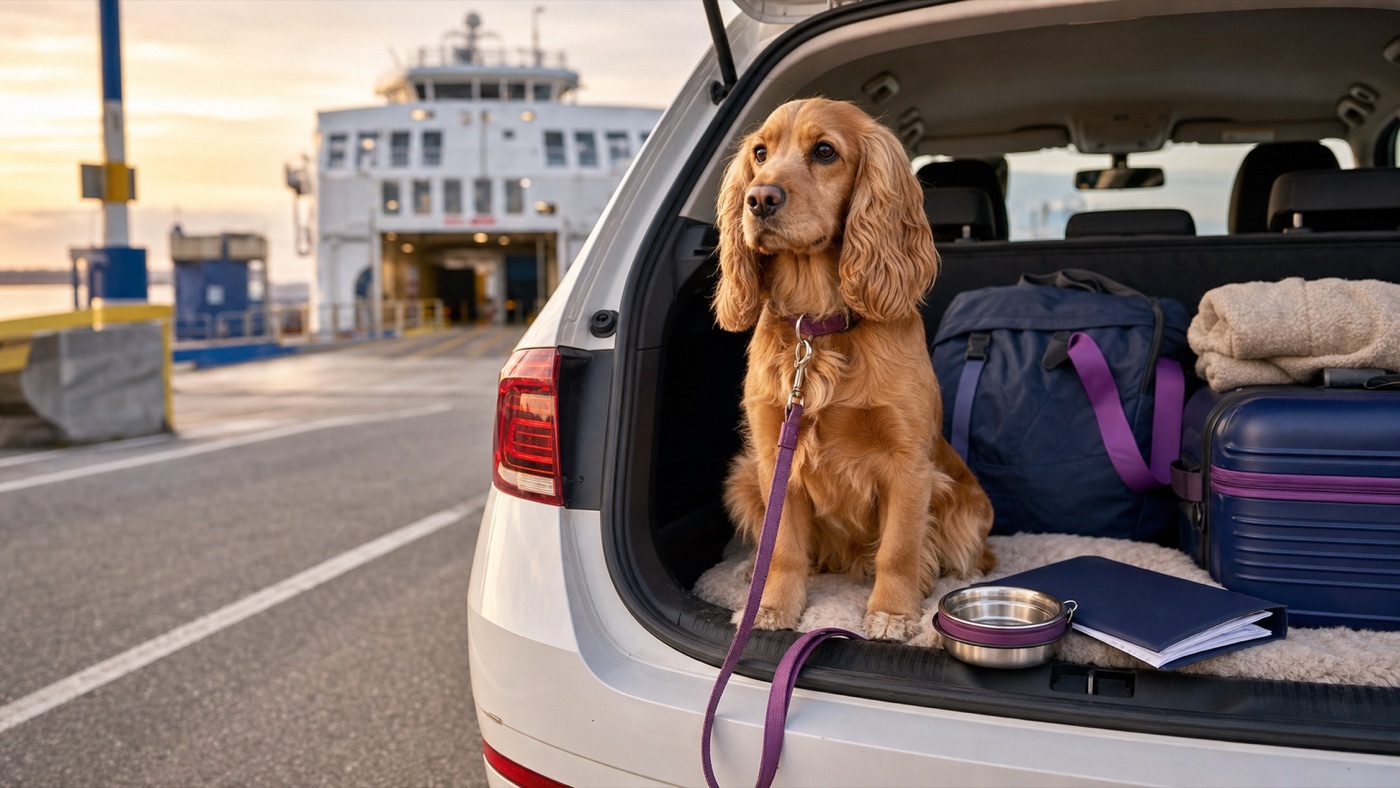
What UK dog owners need to know before travelling to France with a dog, including microchips, rabies vaccines, AHCs and arrival checks.
Taking a dog from the UK to France is still possible after Brexit, but the paperwork has changed. If you live in Great Britain and are travelling to France with your dog, GOV.UK guidance says you should usually prepare for an animal health certificate rather than relying on a Great Britain-issued pet passport.
France is an EU country, so the EU pet travel rules apply to dogs travelling from England, Scotland or Wales.
What documents do I need to take a dog from Great Britain to France?
For most non-commercial trips from England, Scotland or Wales, you need proof that your dog is microchipped, vaccinated against rabies and covered by a valid animal health certificate. Read our animal health certificate guide for the certificate timing, vet appointment and record checks.
GOV.UK says Great Britain residents should not use a pet passport for this journey, even if it was issued in the EU. Northern Ireland has different arrangements, so use the separate official guidance if that is where you live.
Checklist for taking your dog to France
Before travel, check that your dog is:
- Microchipped.
- Vaccinated against rabies after the microchip was implanted.
- Covered by a valid animal health certificate or another valid pet travel document accepted for the journey.
- Travelling through an appropriate travellers’ point of entry when arriving in the EU.
Your vet will need evidence of the microchip date and rabies vaccination history before issuing the AHC.
If you are travelling with more than one pet, GOV.UK says up to 5 pets can be added to one animal health certificate. Each pet must still meet the travel rules.
Rabies vaccination timing
If your dog is receiving a first rabies vaccination, GOV.UK guidance says you must wait at least 21 full days after vaccination before travelling. If your dog has a valid booster, the waiting period may not apply, but you should confirm this with your vet before booking.
The rabies vaccination must be recorded correctly because you may need to show proof when you arrive at an EU travellers’ point of entry.
Animal health certificate timing
An AHC is valid for entry into the EU for 10 days after it is issued. Once you have entered the EU, it is valid for onward travel within the EU for up to 6 months and for re-entry to Great Britain for up to 6 months.
The certificate must be signed by an Official Veterinarian. Your normal vet can issue one if they are authorised as an OV; if not, ask them to recommend a local OV.
Do dogs need tapeworm treatment for France?
France is not on GOV.UK’s list of EU destinations that require tapeworm treatment before arrival. Check again before travelling because another country on your route may have its own requirement.
What do I need for the return journey?
For a direct return from France, a vet must usually treat your dog for tapeworm and record the treatment in the travel document. GOV.UK says the treatment must be given no less than 24 hours and no more than 5 days (120 hours) before you arrive in Great Britain.
The record needs the product name and manufacturer, the treatment date and time, and the vet’s stamp and signature. If your return is delayed beyond the 120-hour window, check with your travel company and a vet because a new treatment may be needed.
Before booking, check both the official return rules and your carrier’s approved route. For the wider paperwork context, see whether the UK pet passport could return.
Our guide to dog tapeworm treatment for returning to Great Britain explains the timing window, vet record and direct-travel exemptions in more detail.
Source
Checked 24 July 2026 against GOV.UK guidance: Taking your pet dog, cat or ferret abroad, Getting an animal health certificate and tapeworm treatment for dogs returning to Great Britain.